Rationing, Recycling, Reusing: WWII's Lasting Impact on Waste Management
Mar 16, 2025 · History
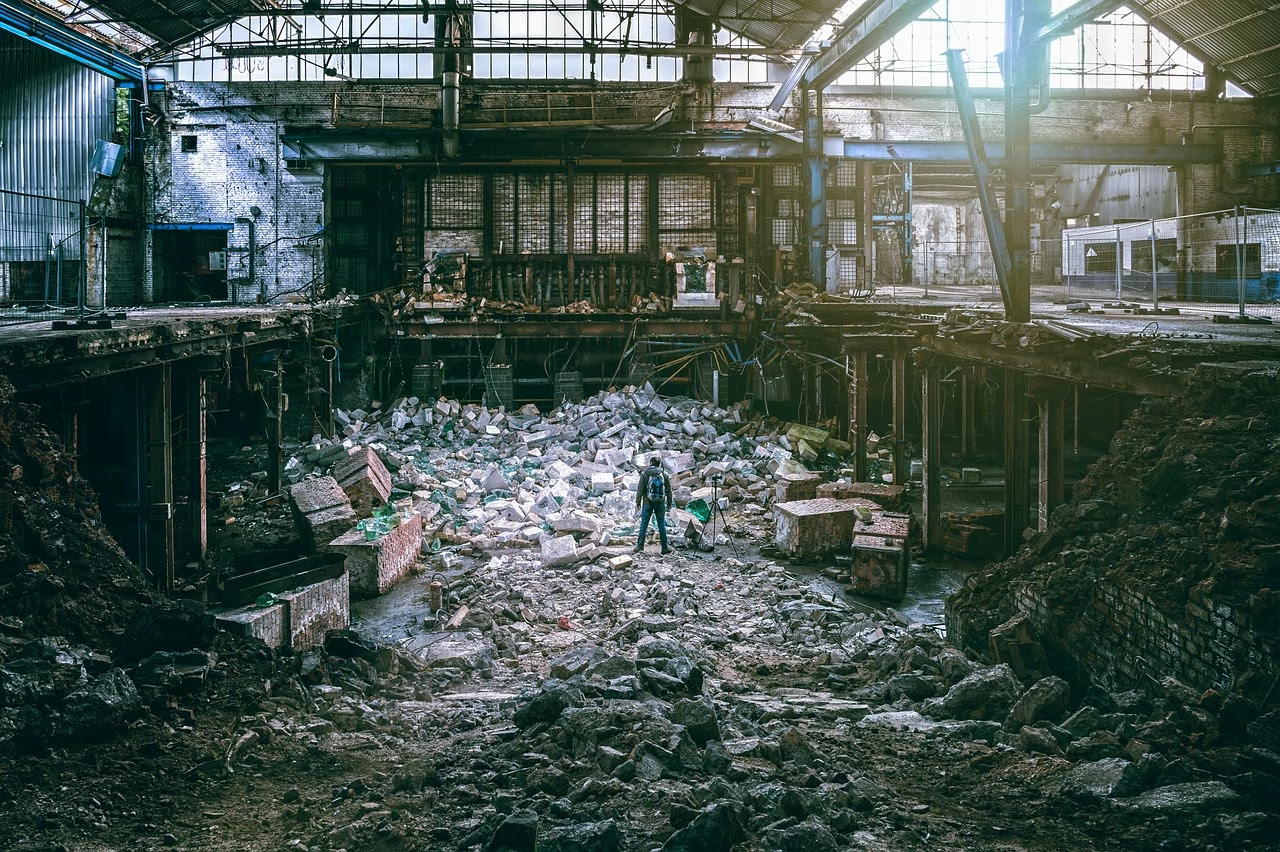
Waste Not, Want Not: Waste Management During World War II
World War II fundamentally transformed how nations approached waste management, turning garbage into a strategic resource and conservation into a patriotic duty. The massive global conflict created unprecedented challenges in material shortages while simultaneously generating enormous volumes of waste from military operations. The innovative solutions developed during this period not only supported the war effort but also laid groundwork for modern recycling and waste management practices.
The Home Front: Scrap Drives and Resource Conservation
Nationwide Mobilization of Materials
As industrial production shifted to military needs, civilian access to key materials became severely restricted. The War Production Board orchestrated nationwide collection campaigns that gathered over 13 million tons of iron and steel. Children eagerly participated in these drives, with schools and communities transforming collection efforts into patriotic competitions.
Some of the most successful civilian collection programs included:
- Metal Salvage: Americans donated everything from pots and pans to decorative ironwork, with one New York drive collecting 5,000 tons of metal in a single day
- Rubber Recovery: Following the Japanese conquest of rubber-producing regions in Southeast Asia, Americans contributed more than 400,000 tons of recycled rubber throughout the conflict
- Paper Conservation: Paper drives, often led by Boy Scouts and Girl Scouts, gathered millions of tons from homes and businesses
In kitchens across America, housewives carefully preserved cooking fats, which contained glycerin vital for manufacturing explosives. This seemingly humble contribution yielded approximately 600 million pounds of recycled kitchen fats directed toward the war effort.
Rationing and Reduction
Beyond collection, governments instituted strict rationing systems to minimize waste. The popular slogan “Use it up, wear it out, make it do, or do without” became a national mantra. This conservation mindset manifested in several ways:
- Victory Gardens transformed lawns and vacant lots into productive food sources, with 20 million American families growing their own vegetables
- Clothing restrictions under General Limitation Order L-85 eliminated excess fabric use in civilian garments
- Manufacturers dramatically reduced packaging or eliminated it entirely to conserve materials
- The British “make do and mend” campaign taught practical skills for extending the life of everyday items
A typical American family during wartime would:
- Save tin cans, wash them, remove labels, and flatten them for collection
- Collect newspapers and magazines in bundles for monthly pickup
- Maintain a small garden plot producing an average of 375 pounds of vegetables annually
- Reuse or repurpose nearly everything, from string to cooking grease
Military Waste Management Challenges
Handling Waste in Combat Zones
Military operations generated enormous quantities of waste under extraordinarily challenging circumstances. Field sanitation became a paramount concern as improper waste management could trigger devastating disease outbreaks among concentrated troop populations.
The U.S. Army Corps of Engineers developed comprehensive standardized sanitation protocols that became critical to maintaining troop health. These innovations included:
“Field sanitation is not merely a convenience but a tactical necessity. A division hospitalized with dysentery is as effectively removed from the battle as one that has been outflanked.” – U.S. Army Field Manual FM 21-10, 1940
Forward operating bases employed portable incinerators to process combustible waste efficiently, significantly reducing both the physical footprint of military encampments and the presence of disease vectors. These systems proved particularly valuable in the Pacific theater, where tropical conditions accelerated decomposition and heightened disease risks.
The recuperation of battlefield materials became increasingly sophisticated as the war progressed:
- Specialized salvage units collected and categorized damaged equipment
- Tank graveyards became essential parts supply centers
- Field repair operations salvaged up to 60% of damaged equipment components
Naval Waste Management
Naval operations presented unique waste handling challenges that required innovative solutions:
- Limited Space: Warships implemented compacting systems to reduce waste volume during extended deployments
- Material Recovery: Specialized sorting stations at naval bases recovered metals, rubber, and other valuable materials
- Discharge Protocols: Strict regulations governed what materials could be discharged at sea and under what conditions
The sheer scale of naval operations is illustrated by USS Enterprise statistics from 1944:
| Waste Category | Monthly Volume | Recovery/Disposal Method |
|---|---|---|
| Metal waste | 7.5 tons | 90% recycled at naval yard |
| Food waste | 22 tons | Discharged at specified distances |
| Paper/packaging | 4.3 tons | Incinerated or stored for recycling |
| Chemical waste | 1.1 tons | Special handling at port facilities |
Industrial Waste and Manufacturing Innovation
Closed-Loop Manufacturing
The intense pressures of wartime production catalyzed remarkable innovations in what would later be termed industrial ecology. Aircraft manufacturers implemented sophisticated systems to collect and reprocess aluminum shavings and various metal waste streams, achieving unprecedented recycling rates.
Case Study: Willow Run Bomber Plant The Ford Motor Company’s massive B-24 Liberator factory at Willow Run, Michigan exemplified closed-loop manufacturing:
- Produced one bomber every 63 minutes at peak production
- Recovered 93% of aluminum waste for direct reuse
- Implemented solvent recovery systems that reclaimed 82% of chemicals
- Developed composite materials from manufacturing waste
- Required suppliers to accept and reuse packaging materials
Chemical manufacturing underwent similar transformations, as facilities developed advanced methods to capture and redistill industrial solvents rather than discard them after initial use. Many of these wartime solvent recovery technologies established the foundation for modern chemical recycling processes still employed in contemporary manufacturing settings.
Repurposing and Adaptation
“Nothing is waste unless we waste it” became an unofficial motto of military equipment management. Creative repurposing extended the usefulness of virtually everything:
Military equipment found new lives through ingenious conversions:
- Damaged tanks → Armored recovery vehicles or mobile artillery
- Parachute silk → Wedding dresses, sutures, and undergarments
- Ammunition crates → Furniture, shipping pallets, and construction materials
- Aircraft parts → Agricultural equipment and civilian vehicles
From Bomber to Tractor: The Post-War Aluminum Boom When wartime aircraft production ceased, a surplus of aluminum entered civilian markets. Enterprising manufacturers transformed:
- B-17 fuel tanks into milk containers
- Wing components into agricultural irrigation systems
- Cockpit instrumentation into consumer electronics
- Fuselage panels into prefabricated housing components
This unprecedented material flow revolutionized consumer goods manufacturing and introduced lightweight metals into countless everyday applications previously dominated by heavier materials.
Post-Combat Waste Management
Dealing with Destruction
The widespread destruction created unprecedented waste management challenges that required systematic approaches:
“The problem is not merely removal, but intelligent recovery and reuse.” – UK Ministry of Works and Planning, 1943
Rubble Processing: Cities like Dresden, Hamburg, and Tokyo developed methodical approaches to clearing and processing millions of tons of rubble. The scale was staggering:
- Hamburg: 43 million cubic meters of rubble
- Dresden: 22 million cubic meters
- Tokyo: 96 million cubic meters
Materials Reclamation: In Britain, the “Salvage of London” program sorted and reclaimed usable materials from bombed buildings, recovering:
- Over 1.5 million tons of brick and stone for reconstruction
- 800,000 tons of metal for industrial use
- 95,000 tons of timber for building materials
Unexploded Ordnance: A dangerous waste management challenge that continues today. By 1946:
- Over 1.2 million unexploded bombs had been cleared in Western Europe
- Specialized EOD (Explosive Ordnance Disposal) techniques were developed
- Systematic mapping and clearance protocols were established
- Long-term management plans were created for areas with extensive contamination
Legacy and Long-term Impact
Environmental Consequences
Not all wartime waste management practices would meet contemporary environmental standards, creating legacies of contamination:
Ocean Dumping: Perhaps the most problematic legacy. After the war:
- 300,000+ tons of chemical weapons were dumped in the Baltic Sea alone
- Thousands of tons of conventional munitions were disposed of in the Atlantic
- Leaking containers continue to release toxins into marine environments
Petroleum Contamination: Naval operations left lasting environmental damage:
- The 1942 Operation Drumbeat submarine campaign resulted in massive oil spills from torpedoed tankers
- Harbor areas suffered contamination from intense ship traffic and battle damage
- Shipyard operations released toxic compounds including lead, mercury, and PCBs
Hastily Constructed Waste Facilities: Manufacturing centers like Oak Ridge created contamination issues that were only addressed decades later. The environmental cleanup costs have been staggering:
| Site | Primary Contaminants | Cleanup Cost | Timeline |
|---|---|---|---|
| Oak Ridge | Radioactive waste, mercury | $4.5 billion | 1989-present |
| Hanford | Plutonium, chemical waste | $113.6 billion | 1989-2060 |
| RAF Bases UK | Aviation fuel, heavy metals | £2.1 billion | 1990-present |
Positive Developments
Despite these environmental challenges, World War II advanced waste management practices in several profound ways:
Public Awareness Transformation The conflict fundamentally shifted public consciousness regarding waste, establishing conservation as a civic virtue with lasting impact:
“The waste habits of a nation were transformed within months, proving that with proper motivation, sweeping behavioral change is possible.” – American Journal of Sociology, 1947
Industrial Resource Recovery Wartime necessity established principles that later became central to sustainable production:
- Material flow analysis and tracking
- Byproduct synergy between industries
- Standardized waste classification systems
- Energy recovery from waste processes
Technological Innovations Systems developed for military waste recovery directly influenced post-war municipal operations:
- High-speed sorting technologies
- Material densification techniques
- Processing standards for recovered materials
- Collection logistics optimization
The organizational infrastructure created for wartime salvage efforts evolved into the framework for modern recycling programs in numerous countries. The UK Salvage Stewardship, established during the war, provided a template for resource recovery that influenced global practices for decades.
Conclusion: The War’s Lasting Influence on Waste Management
World War II represents a pivotal moment in the history of waste management. The conflict’s enormous material demands transformed garbage from something to be discarded into a valuable resource to be carefully managed. The organizational systems, technologies, and public attitudes developed during the war years laid essential groundwork for modern recycling programs.
Perhaps most significantly, the war period demonstrated that with proper motivation and organization, societies could dramatically reduce waste and increase resource recovery. When scrap metal became tanks and old cooking fat became ammunition, the line between waste and resource was permanently blurred in the public consciousness—a perspective that would eventually form the foundation of the environmental movement decades later.
The wartime slogan “Waste Not, Want Not” proved to be not just a temporary measure but the beginning of a fundamental shift in how modern societies approach the challenge of waste management.