The Biggest Waste Management Companies in the United States
Mar 14, 2025 · Waste Guides
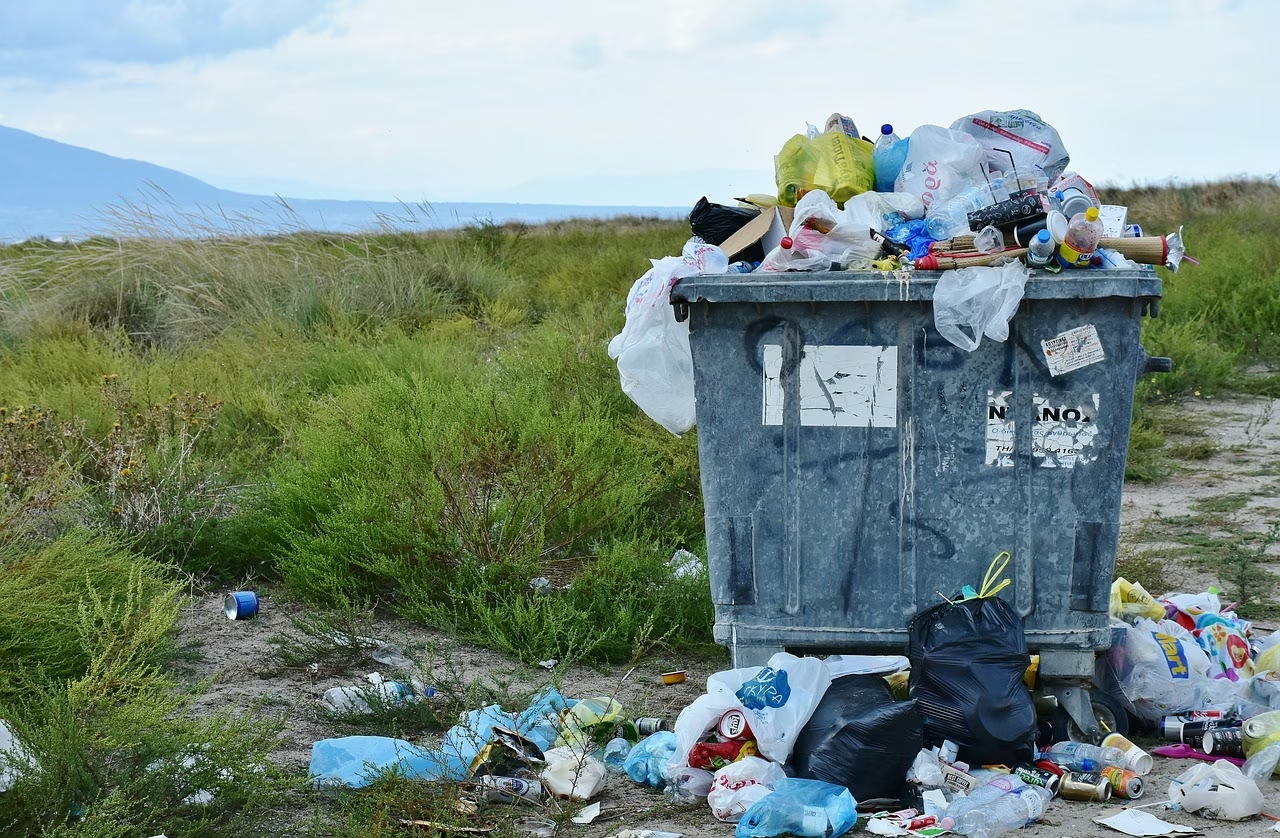
Overview of the U.S. Waste Management Industry
The United States is one of the largest producers of waste in the world, making waste management a major industry nationwide. In 2022, U.S. waste management services revenue surpassed $140 billion, continuing over a decade of steady growth. The industry handles municipal solid waste (MSW) – the everyday trash from homes, businesses, and institutions – as well as industrial, hazardous, medical, and construction debris. Americans generate hundreds of millions of tons of waste each year, with MSW generation reaching about 292 million tons in 2018, roughly 4.9 pounds per person per day. Only about 29% of that MSW was recycled or composted, while 7.6% was incinerated for energy and the remaining 63% was landfilled.
This massive waste stream has driven the growth of large companies that collect, process, and dispose of refuse safely and efficiently across the country. These firms operate vast networks of landfills, recycling plants, transfer stations, and truck fleets to manage waste for municipalities and millions of customers. Industry leader Waste Management, Inc. (WM) alone operated 263 landfills in 2023, along with hundreds of transfer stations and recycling facilities. Strict regulations by the U.S. Environmental Protection Agency (EPA) ensure proper handling of waste, and the industry has increasingly focused on sustainability and resource recovery in recent years.
Largest Waste Management Companies in the U.S. by Revenue and Market Share
A handful of large companies dominate the U.S. waste management sector, accounting for a majority of the industry’s revenue. The top three firms – Waste Management (WM), Republic Services, and Waste Connections – together represent well over 70% of the market among major waste companies. Below is a list of the largest U.S. waste management companies and their approximate revenues and market shares as of 2023:
- Waste Management (WM) – The largest waste company, with about $20.4 billion in annual revenue and roughly 34% market share. Headquartered in Houston, WM serves over 21 million customers across North America. It handles solid waste collection for thousands of communities, owns the most landfills, and is the largest recycler of residential materials.
- Republic Services – The second-largest provider, with roughly $15 billion in annual revenue and about 25% market share. Based in Phoenix, Republic serves around 13–14 million customers in 41 states. It has expanded significantly through mergers, including the acquisition of Allied Waste in 2008, and operates around 200 active landfills nationwide.
- Waste Connections – The third-largest, with about $8 billion in revenue and around 13% market share. Waste Connections operates in 43 U.S. states and 6 Canadian provinces. In addition to typical waste collection, it provides specialized oilfield waste disposal services in energy-producing regions.
- GFL Environmental – A fast-growing Canadian-based firm that is now a top-four North American waste company, with roughly $5.7 billion in revenue and about 9.5% market share. GFL has expanded into the U.S. through acquisitions and manages solid waste, recyclables, and some liquid and hazardous wastes.
- Clean Harbors – A U.S. company focusing on hazardous and industrial waste, with about $5.4 billion in revenue and approximately 9% market share. Clean Harbors is North America’s leading provider of environmental and industrial services, including hazardous waste disposal, chemical waste destruction, and spill response.
Other notable companies include Covanta, a major waste-to-energy operator; Stericycle, a leader in medical waste management; Casella Waste Systems, a regional solid waste company in the Northeast; Waste Pro USA; and Recology, a large privately-held waste and recycling company.
Types of Waste Managed by Major Companies
Municipal Solid Waste (MSW)
Everyday garbage from households, offices, and businesses. Major waste firms like WM, Republic, and Waste Connections handle the bulk of MSW collection and disposal.
Recyclables
Companies process materials such as paper, cardboard, plastics, glass, and metals to divert waste from landfills. They operate Material Recovery Facilities (MRFs) where recyclables are sorted and processed.
Industrial and Commercial Waste
Factories, warehouses, and construction sites generate non-hazardous solid wastes. Waste companies provide roll-off containers and haul bulk waste from these sites to landfills or recycling centers.
Hazardous Waste
Toxic waste from industrial, chemical, and medical sources requires specialized disposal. Clean Harbors and Republic Services (after acquiring US Ecology) are leaders in hazardous waste management.
Medical and Biohazardous Waste
Medical waste includes sharps, used medical supplies, and infectious materials. Stericycle, recently acquired by WM, has been the dominant U.S. provider of medical waste disposal.
E-Waste and Special Wastes
Companies manage electronic waste such as old computers and TVs, often partnering with e-waste recyclers. They also handle household hazardous waste (paints, batteries, pesticides).
Sustainability and Environmental Impact
Landfill Emissions and Renewable Energy
Many companies capture landfill methane and convert it to renewable natural gas (RNG) or electricity. WM and Republic Services operate extensive landfill gas-to-energy projects.
Recycling and Waste Diversion
Major companies process millions of tons of recyclables to conserve resources and reduce landfill use. They invest in advanced sorting technology and Extended Producer Responsibility (EPR) programs.
Fleet and Operations Sustainability
Companies transition truck fleets from diesel to compressed natural gas (CNG) or electric-powered vehicles to reduce emissions. Route optimization software also helps lower fuel consumption.
Community Education and Outreach
Waste firms engage in public education to promote recycling, composting, and waste reduction programs.
Major Mergers, Acquisitions, and Industry Trends
Recent Mergers & Acquisitions
- Waste Management & Advanced Disposal (2020) – A $4.6 billion acquisition, expanding WM’s operations in the Eastern U.S.
- Republic Services & US Ecology (2022) – A $2.2 billion deal, strengthening Republic’s hazardous waste and environmental services portfolio.
- WM & Stericycle (2024) – A $7.2 billion acquisition, making WM a major player in medical waste management.
Industry Trends
- Ongoing Consolidation – The top firms continue acquiring smaller haulers to expand their market share.
- Technology and Innovation – AI sorting, smart bins, and automation are becoming more common.
- Circular Economy and Sustainability – Companies are investing in recycling and renewable energy to align with environmental goals.
- Stable Demand and Resilience – Waste management remains a stable industry, unaffected by economic downturns.
Conclusion
The U.S. waste management industry is dominated by a few major companies that handle a broad spectrum of waste and recycling services. These firms continue to grow through mergers, technological innovations, and sustainability initiatives. As the industry evolves, these companies are leading the way in reducing landfill waste, expanding recycling programs, and investing in renewable energy solutions.